Remembering Baby Doe’s Restaurant in Atlanta: History, Views, and Lasting Legacy
If you ever drove past Atlanta’s Midtown skyline in the late twentieth century, you might remember a strange sight high on a bluff near I‑85: a cluster of “mining shacks” perched above the city, glowing at night, with a packed parking lot and a line at the door. That was Baby Doe’s Matchless Mine, widely known simply as Baby Doe’s Restaurant Atlanta—a destination that blended theme‑park whimsy, steakhouse comfort, and some of the best views of the city.
Today, the restaurant is gone, but the name still sparks nostalgia, curiosity, and a steady stream of online searches. This guide explores what Baby Doe’s was, why it mattered, what stood out about the experience, and how its story fits into Atlanta’s broader dining and development history.
What Was Baby Doe’s Restaurant in Atlanta?
Baby Doe’s Restaurant in Atlanta was a themed, view-focused restaurant inspired by an Old West mining town. It took its name and concept from Baby Doe Tabor, a figure from Colorado mining lore, and recreated a rustic “matchless mine” setting on a hill overlooking the city.
Core idea and atmosphere
Baby Doe’s was designed less like a traditional restaurant and more like a movie set or roadside attraction. Visitors often describe:
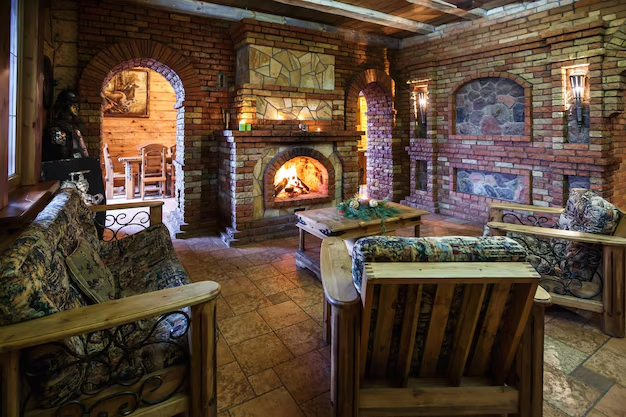
- Weathered wood buildings that looked like mining cabins
- Narrow walkways and stairways connecting different levels
- Old-West décor, including mining tools, artifacts, and vintage-style signs
- A dramatic panoramic view of Atlanta’s skyline from many tables and outdoor vantage points
Instead of blending into the city, Baby Doe’s stood out on purpose. The unusual architecture turned it into a visual landmark and a destination for locals, tourists, and anyone looking for a memorable evening out.
Location, Architecture, and Those Famous Views
One of Baby Doe’s biggest draws was its location on a high bluff near Midtown and the interstate. The specific site gave guests an elevated angle on the skyline that many people still remember decades later.
Why the location mattered
Restaurant-goers often highlight three main elements:
- 🏙️ Skyline views: Baby Doe’s offered a sweeping look at downtown and Midtown, especially striking after dark.
- 🚗 High visibility from the highway: Drivers on nearby interstates could see the quirky “shacks” on the hill, sparking curiosity and word-of-mouth.
- 📍 Proximity to the city core: Close enough for city residents, yet just far enough to feel like a destination outing.
The “mining town” design
The architecture aimed to transport guests to a different place and era. Instead of a single building, the restaurant looked like several structures clinging to a rocky hillside. Inside, visitors describe:
- Exposed beams and rough-hewn wood
- Low lighting with warm, golden tones
- Décor that blended frontier themes with classic steakhouse style
This immersive setting made Baby Doe’s particularly popular for special events, celebrations, and date nights, where the environment mattered as much as the menu.
What Kind of Restaurant Was Baby Doe’s?
Baby Doe’s Atlanta generally followed the format of a casual, full-service American restaurant with a strong emphasis on hearty, familiar dishes and a relaxed, slightly celebratory atmosphere.
Typical menu themes
Reports and memories from past guests consistently point to:
- Steaks and prime rib as centerpieces
- Seafood options, often presented as “surf-and-turf” or simple grilled dishes
- Classic American sides such as baked potatoes, vegetables, salads, and rolls
- Cocktails, wine, and beer, with the bar area serving as a social hub
Rather than being known for cutting-edge cuisine, Baby Doe’s leaned into comfort food and recognizable favorites, pairing them with the novelty of the theme and the impressive view.
Who went there?
Patterns described by past diners suggest that Baby Doe’s attracted:
- Couples on anniversary dinners or date nights
- Families celebrating birthdays, graduations, or holidays
- Business groups seeking a memorable venue for out-of-town guests
- Tourists looking for a “view restaurant” experience in Atlanta
The combination of scenery, theming, and a varied menu made it appealing to a broad range of ages and tastes.
Baby Doe’s and the Themed Restaurant Trend
Baby Doe’s was part of a broader wave of themed, experiential restaurants that grew popular across the United States in the latter half of the twentieth century. These venues emphasized:
- Highly recognizable décor and branding
- A distinct story or concept (in this case, Western mining lore)
- An experience that felt almost like an attraction, not just a meal
The Baby Doe’s “brand”
Atlanta’s Baby Doe’s was reportedly one of several Baby Doe’s locations that shared:
- The “Matchless Mine” identity
- Old-West mining visuals and props
- A consistent focus on view-oriented sites, where possible
This approach reflected a broader trend toward destination dining, where people chose a restaurant not only for its food, but for its atmosphere, setting, and photo-worthy appeal.
Why People Still Search for Baby Doe’s Restaurant Atlanta
Even though Baby Doe’s no longer operates in Atlanta, interest in the restaurant continues. Several factors help explain why the name remains actively searched and discussed.
1. Nostalgia and memory
For many longtime Atlantans, Baby Doe’s is associated with:
- First dates and proposals
- Family gatherings and milestone celebrations
- Early impressions of Atlanta’s changing skyline
Because dining experiences can be tightly linked to personal moments, nostalgic memories keep the restaurant alive in conversation, blogs, and social media posts.
2. Curiosity about Atlanta history
People exploring Atlanta’s development, architecture, and restaurant history often encounter references to Baby Doe’s. It provides a vivid example of:
- How the city used prominent vantage points before high-rise development spread
- The style and tastes that defined earlier eras of local dining
- The evolution from large, themed steakhouses to today’s mix of concepts
3. Interest in the view and the site
Searchers sometimes want to know:
- Whether anything still exists at the original location
- How the skyline has changed since the restaurant’s heyday
- If there are modern restaurants with a similar view experience
In that sense, Baby Doe’s becomes a gateway into exploring current Atlanta rooftop bars, skyline-view restaurants, and scenic overlooks.
What Happened to Baby Doe’s in Atlanta?
Baby Doe’s eventually closed, and the original hillside location has been redeveloped. While specific business decisions and timelines can vary by source, several broader trends help explain why an iconic restaurant like this might not survive in the long term.
Changing dining expectations
Over time, diners in many cities began to show growing interest in:
- Locally sourced or seasonally driven menus
- More specialized cuisines and chef-driven concepts
- Casual but modern interiors instead of heavy, themed décor
In that environment, large, highly themed restaurants sometimes struggled to adapt quickly, especially when their reputations were tightly tied to a single concept and layout.
Real estate pressure and redevelopment
Baby Doe’s occupied a valuable, view-rich property near central Atlanta, an area that became increasingly attractive for:
- Office and commercial developments
- Hotel or residential projects
- Higher-density mixed-use buildings
As land values and development priorities shifted, unique standalone restaurants on major sites sometimes gave way to new projects that made more intensive use of the land.
Baby Doe’s Atlanta in the Context of the City’s Growth
The story of Baby Doe’s is also a story about Atlanta’s rapid growth and evolving identity.
From roadside curiosity to urban landmark
When Baby Doe’s was first established, Atlanta’s skyline and surrounding neighborhoods were still evolving. Over the years:
- The skyline expanded, with new tall buildings changing the visual composition
- Neighborhoods near the restaurant site became denser and more commercially active
- The hilltop that once hosted a quirky “mining town” restaurant gradually fit into a more urban context
Baby Doe’s can be seen as a kind of time capsule of an era when large themed restaurants on prominent hillsides were a distinctive part of the city’s landscape.
Influence on later “view” restaurants
While Baby Doe’s itself is gone, the idea of pairing a strong view with dining remains very active in Atlanta. Many later restaurants and bars have emphasized:
- Rooftop seating with skyline vistas
- Floor-to-ceiling windows in high-rise buildings
- Outdoor patios with carefully framed cityscapes
In conversations about these modern venues, people sometimes bring up Baby Doe’s as an early example of view-focused dining in Atlanta.
Common Questions About Baby Doe’s Restaurant Atlanta
To help organize some of the most frequent areas of curiosity, here is a quick reference:
| Question 🧐 | Short Answer |
|---|---|
| Was Baby Doe’s a real mine? | No. It was a themed restaurant designed to look like a Western mining town. |
| What kind of food did it serve? | Primarily American fare such as steaks, prime rib, seafood, and classic sides. |
| Why is it remembered? | For its dramatic hilltop location, skyline views, and distinctive décor. |
| Is Baby Doe’s still open in Atlanta? | No. The Atlanta location closed, and the site has been redeveloped. |
| Can you still visit the old building? | The original mining-town structure is no longer operating as Baby Doe’s, and reports indicate it has been removed or replaced as part of later development. |
| Were there other Baby Doe’s locations? | Yes, the concept was used in multiple cities, all based on the same mining-town theme. |
How Baby Doe’s Fits Into Atlanta’s Restaurant Memory
Atlanta’s dining scene has always been dynamic, with well-known names rising, falling, and sometimes returning in new forms. Baby Doe’s stands out because it represented a very specific mix of elements:
- A large-scale, theatrical theme
- A focus on view and visual impact
- A menu rooted in approachable, familiar dishes
As a result, it lives on in:
- Online nostalgia threads and memory-sharing groups
- Personal stories passed down within families
- Occasional references in discussions of Atlanta’s architectural and cultural history
For many, Baby Doe’s is less about a specific entrée and more about how it felt to step onto that hillside at dusk, walk through the rambling wooden structures, and see the lights of the city spread out below.
Quick Takeaways About Baby Doe’s Restaurant Atlanta
Here is a concise, skimmable snapshot of the most important points:
- 🏔️ Theme: Old West mining town, complete with “shacks” and mining décor.
- 🏙️ Location: Hilltop site near central Atlanta with sweeping skyline views.
- 🍽️ Cuisine style: Classic American steakhouse-style dishes and comfort food.
- 🎉 Occasions: Popular for dates, celebrations, and out-of-town guests.
- 🕰️ Status: No longer operating; the site has been redeveloped.
- 🧭 Legacy: Often remembered as one of Atlanta’s most distinctive themed restaurants and an early example of view-focused dining.
Why the Story Still Matters
Even without a physical building to visit, Baby Doe’s Restaurant Atlanta continues to shape how people remember the city’s past. It symbolizes a time when a restaurant could function as a local landmark, roadside spectacle, and social gathering place all at once.
For those exploring Atlanta’s history—or simply following a thread of nostalgia from an old family photo or memory—Baby Doe’s serves as a reminder that cities are built not only from towers and roads, but also from the restaurants, experiences, and shared stories that define daily life in each era.
Related Topics
- 356 Restaurant Atlanta
- 57th Fighter Group Restaurant Atlanta
- 57th Restaurant Atlanta Georgia
- 57th Squadron Restaurant Atlanta
- 5 Church Atlanta Restaurant
- 5 Seasons Restaurant And Brewery Atlanta
- 7 Lamps Restaurant Atlanta
- A2b Restaurant Atlanta
- African Restaurant Atlanta
- Alma Cocina Restaurant Atlanta
- Amalfi Restaurant Atlanta
- a Mano Atlanta Restaurant
- American Cut Restaurant Atlanta
- Anis Restaurant Atlanta Ga
- Antico Restaurant Atlanta
- Apres Diem Restaurant Atlanta
- Argosy Restaurant Atlanta
- Aria Atlanta Restaurant
- Asante Restaurant Atlanta
- Astor Court Restaurant Atlanta
- Atkins Park Restaurant Atlanta
- Atlanta Airport Restaurant
- Atlanta Bangladeshi Restaurant
- Atlanta Best Thai Restaurant
- Atlanta Biscuit Restaurant