Exploring Cambodian Food in Atlanta: Where to Go and What to Order
If you search for “Cambodian restaurant Atlanta” today, you may notice something interesting: Cambodian food is not yet as visible in the city as Thai, Vietnamese, or Chinese cuisine. Yet interest in Khmer flavors is growing, and more diners are actively looking for authentic or Cambodian-inspired dishes in and around Atlanta.
This guide walks through what to expect from Cambodian cuisine, how to find Cambodian food in the Atlanta area (even when a fully dedicated restaurant is hard to locate), and how to make the most of your dining experience once you get there.
What Makes Cambodian Cuisine Unique?
Cambodian food, also known as Khmer cuisine, shares some ingredients and techniques with neighboring Thailand and Vietnam, but it has its own distinct personality.
Core Flavors and Ingredients
Typical Cambodian dishes balance savory, herbal, sour, and lightly sweet notes rather than intense heat.
Common building blocks include:
- Kroeung: A fragrant spice and herb paste made with ingredients like lemongrass, galangal, kaffir lime leaves, turmeric, garlic, and shallots. Many curries and stir-fries start here.
- Prahok: A fermented fish paste that adds deep umami. It is often used in sauces, dips, or as a background seasoning.
- Rice and noodles: Steamed jasmine rice, rice vermicelli, and flat rice noodles appear in many meals.
- Fresh herbs: Basil, cilantro, mint, and sawtooth herb brighten broths and salads.
- Fish and seafood: River fish and seafood feature prominently, often grilled, steamed, or cooked in curries.
Signature Cambodian Dishes to Know
If you come across a Cambodian restaurant or a spot with Khmer dishes on the menu in Atlanta, you may encounter:
Amok (Fish Amok)
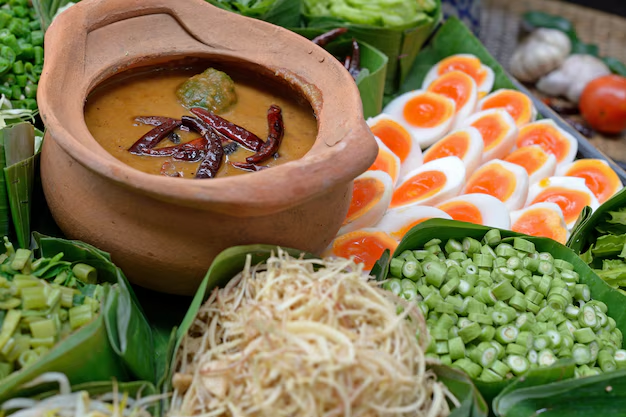
A mild, creamy curry typically steamed with fish, coconut milk, and kroeung, sometimes served in a banana leaf. It is often seen as a national dish and tends to be rich and aromatic rather than spicy.Bai Sach Chrouk (Grilled Pork with Rice)
Grilled or marinated pork over rice, often served with pickled vegetables and sometimes a light broth. Traditionally a breakfast dish, but also satisfying any time of day.Kuy Teav (Noodle Soup)
A clear, savory broth with rice noodles, herbs, and sometimes slices of pork, beef, or seafood. It is a comforting, customizable dish.Lok Lak
Stir-fried marinated beef (or sometimes other proteins) served with fresh vegetables and a tangy dipping sauce, often lime and pepper based.Nom Banh Chok (Khmer Noodles)
Rice noodles topped with a light, herbal fish-based curry sauce and lots of crisp vegetables and herbs.
Understanding these dishes helps when browsing menus in Atlanta, especially at places that might serve Cambodian–Thai or Cambodian–Vietnamese fusion.
Cambodian Restaurant Options in Atlanta: What to Expect
Atlanta’s food scene is dynamic and constantly changing. While you might not see a large number of clearly labeled “Cambodian restaurants” at any given moment, there are a few patterns that can help you find Khmer-inspired flavors.
1. Dedicated or Cambodian-Led Restaurants
At times, the metro area includes:
- Small, family-run eateries that highlight Cambodian recipes.
- Restaurants that may brand themselves broadly as “Asian,” “Southeast Asian,” or “noodle houses” but are owned or influenced by Cambodian families.
Because restaurants open, close, or rebrand over time, the exact list of places changes. Diners often discover Cambodian spots through:
- Word of mouth and local communities
- Social media posts featuring Khmer dishes
- Food blogs and local food groups that spotlight lesser-known cuisines
When you hear about a promising place, it can help to check photos of the menu or customer reviews to see whether dishes like amok, lok lak, or Khmer noodle soups appear.
2. Hybrid and Fusion Concepts
Some restaurants in Atlanta blend Cambodian flavors with Thai, Lao, or Vietnamese dishes, especially if the owners have roots in multiple countries or communities.
On these menus, you might see:
- Thai curries alongside a Cambodian-style fish curry or amok
- Noodle soups similar to pho that use broth or toppings inspired by Cambodian kuy teav
- House specials that highlight lemongrass, turmeric, and prahok without explicitly labeling them as Cambodian
These hybrid concepts can be a practical entry point to Cambodian flavors for diners who are new to the cuisine.
3. Cambodian Food in Markets and Pop-Ups
Some of the most authentic Cambodian food experiences in a city like Atlanta may be:
- Pop-up events hosted at bars, coffee shops, or shared kitchens
- Stalls or counters in Asian markets
- Community festivals and cultural events where local cooks serve family recipes
Because these options are often temporary or seasonal, they may not appear when you search for “Cambodian restaurant Atlanta,” but they can offer a very direct window into Khmer home cooking.
How to Search for Cambodian Food in Atlanta
Standard search results may not always capture small or newer businesses, so it helps to look beyond a single phrase.
Useful Search and Discovery Approaches
Try combining different search terms and methods, such as:
- “Cambodian food Atlanta”
- “Khmer cuisine Atlanta”
- “Southeast Asian restaurant Atlanta”
- “Fish amok Atlanta” or “lok lak Atlanta”
And then complement search with:
- Map apps: Browsing around areas with dense Asian dining, like certain pockets of Buford Highway or suburbs with diverse food corridors.
- Social media: Checking photo tags and food influencer posts for Cambodian dishes.
- Community groups: Local forums or cultural organizations sometimes spotlight Cambodian-owned businesses.
Reading Menus Strategically
When you find a candidate restaurant, scan the menu for signs of Khmer influence:
- Mentions of amok, lok lak, or Khmer noodles
- Emphasis on fermented fish, kroeung-like herb pastes, or lemongrass-heavy curries
- Descriptions calling out Cambodian family recipes or “Khmer-style” dishes
Even if a restaurant is not exclusively Cambodian, it might offer a handful of authentic or closely inspired dishes.
What to Order: A Quick Beginner’s Guide
If you manage to track down a Cambodian restaurant or Cambodian-inspired menu in Atlanta, it can be hard to know where to start. These dishes are often approachable for first-time diners:
Gentle Introductions to Cambodian Flavors
Fish Amok
Good if you enjoy Thai curries but prefer something milder and creamier. It showcases the depth of kroeung without overwhelming spice.Lok Lak
Familiar to anyone who likes stir-fried beef dishes. The lime and pepper dipping sauce makes it distinctive.Kuy Teav
Ideal for those who like pho or other noodle soups. The broth tends to be clear and aromatic, with herbs and toppings added to taste.
For Adventurous Eaters
Dishes featuring prahok
These can be bold and deeply savory. Some versions appear as sauces or relishes served with vegetables, rice, or grilled meat.Fermented or pickled sides
Cambodian cuisine often pairs rich dishes with sharp or sour condiments, which can be exciting for fans of strong flavors.
Simple Flavor Guide for Diners
Here is a quick overview of how Cambodian dishes typically “feel” on the palate compared to other Southeast Asian cuisines:
| Aspect | Cambodian Cuisine | Often Compared To |
|---|---|---|
| Spice level | Typically moderate; heat is present but measured | Hotter Thai dishes; milder Vietnamese |
| Main highlights | Herbs, citrus, fermented depth, coconut | Thai curries, Vietnamese herbs |
| Signature base | Kroeung (herb and spice paste) | Thai curry pastes, Lao herb pastes |
| Umami source | Prahok, fish sauce, dried shrimp | Fish sauce in Vietnamese and Thai cooking |
| Typical textures | Curries, stews, grilled meats, noodle soups | Similar structures with distinct flavors |
This comparison is general and varies by restaurant and cook, but it can help set expectations before you order.
Practical Tips for Enjoying Cambodian Food in Atlanta 🌶️🍚
A few simple habits can make your search and dining experience more rewarding.
When You Are Searching
- 🔍 Use broader terms: Combine “Cambodian,” “Khmer,” and “Southeast Asian” with “Atlanta” or specific neighborhoods.
- 📍 Check nearby suburbs: Many Southeast Asian restaurants cluster outside the city center.
- 📸 Look at photos: Shared images of amok, rice dishes, or noodle soups often reveal Cambodian dishes even when they are not highlighted in text.
When You Are Ordering
- 🗣️ Ask staff about Khmer dishes: Servers often know which menu items are closest to Cambodian home cooking.
- 🌿 Start with balanced flavors: Curries, lok lak, and noodle soups offer distinct Cambodian character without being overpowering.
- 🍽️ Share plates: Ordering several dishes family-style allows you to sample more flavors in a single visit.
When You Want to Explore More Deeply
- 🎉 Watch for festivals and events: Cultural celebrations sometimes feature traditional Cambodian foods that are not on everyday restaurant menus.
- 🤝 Support small businesses: Many Cambodian and Khmer-influenced spots are family-run; repeat visits can help them gain visibility.
- 📱 Follow them online: Pop-ups and special menus are often announced through social channels.
Understanding Cambodian Food Culture in an Atlanta Context
Exploring Cambodian food in Atlanta is not just about finding a specific restaurant name; it is about recognizing a culinary tradition that sometimes appears in subtle ways:
- A broth seasoned in a style familiar to Khmer cooks
- A curry that uses kroeung but is labeled simply as “house curry”
- A rice dish that draws on Cambodian comfort food but is presented on a mixed Southeast Asian menu
As the city’s dining landscape evolves, more chefs and restaurateurs may choose to highlight Cambodian identity directly. Others may continue to fold those influences quietly into broader “Asian” menus. Both approaches can give diners a way to experience Khmer flavors, especially when they know what to look for.
Key Takeaways for Diners in Atlanta 🌏
- Cambodian cuisine is distinct, with dishes like amok, lok lak, kuy teav, and nom banh chok offering a recognizable style of seasoning and balance.
- Dedicated Cambodian restaurants in Atlanta can be limited, but Cambodian-inspired dishes often appear in broader Southeast Asian eateries, markets, and pop-ups.
- Smart searching and menu reading—looking for specific dish names and flavor cues—can uncover Khmer options even when a restaurant does not advertise itself as Cambodian.
- Talking with staff and trying a range of dishes helps you understand how Cambodian flavors are interpreted in Atlanta’s diverse food scene.
Exploring Cambodian food in Atlanta can feel like a bit of a treasure hunt. With some curiosity, flexible expectations, and a willingness to try new dishes, diners can uncover a rich and evolving corner of the city’s culinary landscape.
Related Topics
- 356 Restaurant Atlanta
- 57th Fighter Group Restaurant Atlanta
- 57th Restaurant Atlanta Georgia
- 57th Squadron Restaurant Atlanta
- 5 Church Atlanta Restaurant
- 5 Seasons Restaurant And Brewery Atlanta
- 7 Lamps Restaurant Atlanta
- A2b Restaurant Atlanta
- African Restaurant Atlanta
- Alma Cocina Restaurant Atlanta
- Amalfi Restaurant Atlanta
- a Mano Atlanta Restaurant
- American Cut Restaurant Atlanta
- Anis Restaurant Atlanta Ga
- Antico Restaurant Atlanta
- Apres Diem Restaurant Atlanta
- Argosy Restaurant Atlanta
- Aria Atlanta Restaurant
- Asante Restaurant Atlanta
- Astor Court Restaurant Atlanta
- Atkins Park Restaurant Atlanta
- Atlanta Airport Restaurant
- Atlanta Bangladeshi Restaurant
- Atlanta Best Thai Restaurant
- Atlanta Biscuit Restaurant