Exploring Pakistani Restaurants in Atlanta: A Flavorful Guide to the City’s South Asian Food Scene
Atlanta’s food scene is known for its soul food, barbecue, and international flavors—but Pakistani restaurants in Atlanta are quietly becoming some of the city’s most intriguing dining spots. From smoky grilled meats and slow-cooked curries to street snacks and fresh flatbreads, Pakistani cuisine offers a deep, comforting kind of flavor that appeals to both adventurous eaters and those who simply enjoy a satisfying meal.
This guide walks through what to expect, how to navigate menus, and how Pakistani restaurants fit into Atlanta’s broader South Asian dining landscape.
What Makes a Pakistani Restaurant Distinct?
Pakistani restaurants in Atlanta often share similarities with Indian and broader South Asian spots, but there are some common characteristics that help them stand out.
Key Features You’ll Often Notice
- Robust use of spices like cumin, coriander, chili, garam masala, and black pepper
- Charcoal or tandoor-style grilling for kebabs and breads
- A strong culture of rice and bread-based meals, especially biryani and naan
- Dishes that lean toward deep, warming flavors rather than mild or sweet profiles
- Menus that may feature halal meat, reflecting common dietary practices in Pakistani culture
While menus can overlap with North Indian cuisine, many diners notice that Pakistani food often emphasizes meat-forward dishes, smoky flavors, and richer gravies.
Popular Dishes to Try at Pakistani Restaurants in Atlanta
If you’re visiting a Pakistani restaurant in Atlanta for the first time, the menu can feel extensive. Knowing a few classic dishes makes it much easier to decide.
Grilled & Tandoori Specialties
These dishes are frequently highlighted as house favorites:
- Chicken Tikka – Boneless chicken pieces marinated in yogurt, ginger, garlic, and spices, then grilled. Often served sizzling with onions and peppers.
- Seekh Kebabs – Ground meat (often beef or chicken) mixed with spices, shaped onto skewers, and cooked over high heat.
- Tandoori Chicken – Bone-in chicken marinated and cooked in a very hot clay oven, resulting in a slight char and smoky flavor.
These dishes are typically enjoyed with naan and chutneys (mint, tamarind, or yogurt-based sauces).
Hearty Curries and Stews
Curries are central to Pakistani home-style cooking and appear prominently in Atlanta’s Pakistani restaurants:
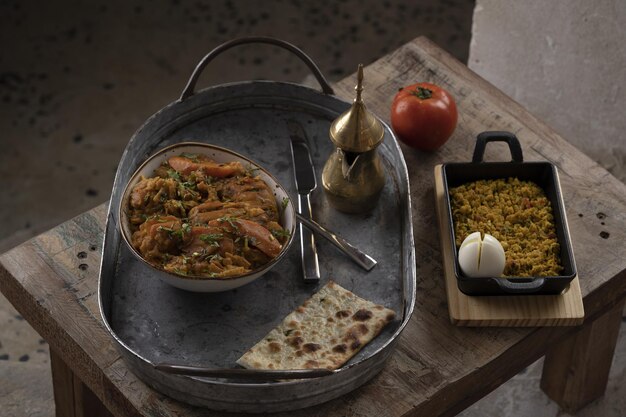
- Chicken Karahi – A stir-fried curry made in a wok-like pan (karahi), often with tomato, ginger, green chilies, and coriander.
- Nihari – A slow-cooked, savory stew, traditionally eaten at breakfast in Pakistan but often served throughout the day in restaurants abroad.
- Haleem – A thick, porridge-like dish of meat, lentils, and grains, simmered until smooth and garnished with fried onions, lemon, and fresh herbs.
- Qorma / Korma – A rich, spiced curry often prepared with chicken, lamb, or beef, and sometimes accented with nuts or cream.
These dishes tend to be deeply flavored and filling, often ordered for family-style sharing.
Biryani, Rice & Breads
Rice and bread round out most meals:
- Biryani – Layered rice dish cooked with spiced meat or vegetables, known for its aromatic blend of herbs and spices. Pakistani-style biryani often has a bold, savory kick.
- Pulao – Rice cooked in stock with spices and sometimes meat, usually milder than biryani.
- Naan – Leavened flatbread baked in a tandoor, often available in plain, garlic, or buttered varieties.
- Roti/Chapati – Whole wheat flatbreads, thinner and lighter than naan, common in more traditional or home-style meals.
Street Snacks & Sides
Some Pakistani restaurants in Atlanta also bring in elements of South Asian street food:
- Samosas – Fried pastry pockets typically stuffed with spiced potatoes, peas, or minced meat.
- Chaat – Tangy, crunchy, and fresh, often mixing fried dough, chickpeas, yogurt, chutneys, and spices.
- Pakoras – Fritters made from vegetables or chicken dipped in a gram-flour batter and fried.
These are often ordered as starters or shared snacks, especially in casual or buffet-style spots.
How Pakistani Restaurants Fit into Atlanta’s South Asian Scene
Atlanta’s international dining scene has grown over time, with significant clusters of South Asian restaurants around areas like:
- Decatur and Clarkston – Known for diverse, immigrant-owned eateries
- Suburbs along major interstates – Where many South Asian grocery stores and halal butchers are located
Within this mix, Pakistani restaurants tend to:
- Share neighborhoods with Indian, Bangladeshi, and Nepali restaurants
- Sometimes market themselves as “Pakistani & Indian” to help new diners understand their offerings
- Frequently offer halal options, attracting diners who prioritize this
It’s common for menus to blend dishes familiar to a broad South Asian audience with signature Pakistani specialties, especially biryani, karahi, and grilled meats.
Navigating a Pakistani Menu in Atlanta
For many visitors, the main question is not “Where do I go?” but “What do I order once I get there?”
Reading the Menu Without Feeling Overwhelmed
Many Pakistani restaurants group items into common categories:
- Appetizers – Samosas, pakoras, chaat
- Tandoori & Grill – Kebabs, tikka, tandoori chicken
- Chicken, Beef, and Goat/Lamb Curries – Karahi, korma, handi dishes
- Vegetarian Curries – Lentils, chickpeas, spinach, and mixed vegetables
- Rice & Breads – Biryani, pulao, naan, roti
- Desserts – Gulab jamun, kheer (rice pudding), and similar sweets
Many menus also use spice-level labels (mild, medium, hot), though actual heat can vary by restaurant and chef.
Common Dietary Patterns
Pakistani restaurants in Atlanta often accommodate a few frequent preferences:
- Halal meat is commonly used, reflecting the dietary practices of many Pakistani communities.
- Vegetarian options are usually available, though the cuisine overall is often meat-focused compared with some neighboring South Asian traditions.
- Gluten-free choices can sometimes be found in items like grilled meats, rice dishes, and certain curries, but sauces and breads may contain gluten, so diners typically ask for details when this matters to them.
Quick Reference: What to Expect at a Pakistani Restaurant in Atlanta 🍽️
| Topic | What You’ll Commonly Find |
|---|---|
| Flavor profile | Bold, spiced, savory, often with smoky or slow-cooked depth |
| Signature dishes | Biryani, chicken karahi, nihari, seekh kebabs, haleem |
| Common breads | Naan, garlic naan, roti/chapati |
| Typical atmosphere | Casual to family-style, sometimes buffet or mixed table service |
| Dietary patterns | Frequent halal options, several vegetarian dishes, rice- and bread-based sides |
| Menu overlap | Some shared dishes with Indian cuisine, but distinct emphasis on grilled meats and biryanis |
Dining Formats: Buffet, À La Carte, and Takeout
Pakistani restaurants in Atlanta are not all the same in how they serve food. A few common formats appear repeatedly.
Buffet-Style or Combo Plate Setups
Some restaurants offer:
- Daily lunch buffets with rotating curries, rice, and grilled items
- Weekend specials like haleem or nihari that may only be prepared on certain days
- Combo plates that bundle one or two mains with rice, bread, and a side
Buffets and combo plates are often chosen by people who want to sample multiple dishes at once or who are new to the cuisine.
Traditional Table Service
Other restaurants specialize in à la carte dining, where guests:
- Order appetizers, mains, and sides individually
- Share meals family-style, placing multiple dishes in the center of the table
- Customize spice levels or portion sizes when possible
This format is well-suited to group dinners or more leisurely meals.
Takeout and Catering
Many Pakistani restaurants in Atlanta also:
- Offer takeout and phone orders for families and office lunches
- Prepare catering trays of biryani, kebabs, and curries for events
This flexibility helps the cuisine reach both neighborhood regulars and larger gatherings.
Flavor & Spice: Understanding Heat Levels
One common question among new diners is how spicy Pakistani food actually is.
General Patterns in Spice
- Many traditional Pakistani dishes are highly seasoned, but not every dish is extremely hot.
- Restaurants that serve a diverse customer base in Atlanta often adjust recipes to suit a wider range of tastes, which may reduce the overall heat compared with some home-style cooking.
- Items labeled as “spicy” or “hot” usually contain more chili, while dishes like korma or some lentil curries may be milder.
Diners who are sensitive to spice often lean toward:
- Korma-style curries
- Grilled meats (tikka, kebabs) with yogurt-based sauces
- Dal (lentils) and chana (chickpeas), which can sometimes be prepared on the milder side
Family, Community, and Cultural Context
Pakistani restaurants in Atlanta often serve as more than just places to eat. For many owners and regulars, they are:
- Community hubs, where local families gather
- Spaces that host religious or cultural celebrations, especially around major holidays
- Informal meeting points for people interested in South Asian culture, language, and food
Some restaurants reflect this through:
- Large, family-style tables
- Group platters meant to be shared
- Expanded menus during festive seasons that highlight special-occasion dishes like certain sweets or celebratory rice dishes
Even if a guest is unfamiliar with the culture, they often notice a focus on hospitality, shared eating, and generous portions.
Practical Tips for Enjoying Pakistani Restaurants in Atlanta 🌶️
Here are some simple, consumer-focused ideas that many diners find helpful:
- 🥘 Start with a mixed plate: Pair one grilled dish (like chicken tikka) with one curry (such as chicken karahi) plus rice and naan to experience a range of flavors.
- 🌶️ Clarify spice preferences: When ordering, mentioning “mild,” “medium,” or “spicy” can help align the dish with your comfort level.
- 🧕 Ask about halal options: If halal meat matters to you, many Pakistani restaurants clearly label or can confirm this.
- 🥗 Balance your meal: Combine richer main dishes with lighter sides like salad, yogurt (raita), or lentils for a more rounded plate.
- 🍛 Share family-style: Ordering several mains for the table often gives a more complete sense of the cuisine than choosing only a single dish.
- 🍮 Leave room for dessert: Sweets like gulab jamun or kheer offer a gentle, comforting finish after a spiced main course.
How Pakistani Restaurants Reflect Atlanta’s Evolving Food Identity
Pakistani restaurants in Atlanta illustrate how the city’s food identity continues to evolve:
- They highlight immigrant-owned entrepreneurship in emerging neighborhoods and suburbs.
- They broaden local definitions of “South Asian food” beyond a single label, showing the regional diversity within that category.
- They introduce more Atlantans to halal dining, biryani flavors, and grilled kebab traditions that differ from other global cuisines in the city.
For many diners, exploring Pakistani restaurants becomes a way to experience new flavors, community spaces, and culinary traditions that are increasingly woven into Atlanta’s multicultural fabric.
As Atlanta’s dining landscape grows, Pakistani restaurants contribute a distinct, deeply seasoned voice—one that rewards curiosity with generous plates, complex aromas, and a style of hospitality that invites guests to linger, share, and return.
Related Topics
- 356 Restaurant Atlanta
- 57th Fighter Group Restaurant Atlanta
- 57th Restaurant Atlanta Georgia
- 57th Squadron Restaurant Atlanta
- 5 Church Atlanta Restaurant
- 5 Seasons Restaurant And Brewery Atlanta
- 7 Lamps Restaurant Atlanta
- A2b Restaurant Atlanta
- African Restaurant Atlanta
- Alma Cocina Restaurant Atlanta
- Amalfi Restaurant Atlanta
- a Mano Atlanta Restaurant
- American Cut Restaurant Atlanta
- Anis Restaurant Atlanta Ga
- Antico Restaurant Atlanta
- Apres Diem Restaurant Atlanta
- Argosy Restaurant Atlanta
- Aria Atlanta Restaurant
- Asante Restaurant Atlanta
- Astor Court Restaurant Atlanta
- Atkins Park Restaurant Atlanta
- Atlanta Airport Restaurant
- Atlanta Bangladeshi Restaurant
- Atlanta Best Thai Restaurant
- Atlanta Biscuit Restaurant