Designing a Standout Space: A Practical Guide to Restaurant Furniture in Atlanta
Opening a restaurant in Atlanta—or refreshing an existing one—often starts with a vision: bustling tables, comfortable guests, and a space that feels unmistakably “you.” Restaurant furniture plays a central role in turning that vision into a reality. It shapes your guests’ experience, supports your operations, and helps communicate your brand, all before a single dish reaches the table.
This guide explores how to think about restaurant furniture in Atlanta, from style and layout to durability and local considerations, so you can make informed, confident decisions.
Why Restaurant Furniture Matters More Than It Looks
Furniture in a restaurant is more than decor. It influences:
- Comfort and dwell time – How long guests are likely to stay and how relaxed they feel.
- Table turnover and revenue – Seating choices impact how many people you can serve.
- Accessibility and flow – The ease with which staff and guests move around the space.
- Brand and ambiance – How your concept feels in person: casual, upscale, modern, traditional.
In a city like Atlanta, with its mix of neighborhood spots, high-end dining, and fast-casual concepts, furniture often becomes a defining part of your competitive edge.
Understanding Your Concept and Space
Before looking at catalogs or showrooms, it helps to clarify a few core elements.
Define Your Restaurant Concept
Different concepts benefit from different furniture choices:
Fast-casual and quick-service
- Often favor durable, easy-to-clean seating.
- May use fixed booths and banquettes to guide traffic and maximize space.
- Simple materials and stackable chairs can help with flexibility.
Full-service and fine dining
- Emphasize comfort and atmosphere, such as upholstered chairs and spacious tables.
- May opt for heavier, more permanent pieces to create a grounded, upscale feel.
Cafés and coffee shops
- Frequently combine smaller tables with a mix of chairs, stools, and soft seating.
- May include workspace-friendly options like counter seating with outlets nearby.
Bars, breweries, and lounges
- Often use bar-height tables and stools, communal tables, and some lounge-style seating.
- Durable finishes are especially important due to higher traffic and frequent spills.
Clarifying your concept makes later decisions about materials, colors, and layouts much more focused.
Analyze Your Floor Plan
The size and shape of your space in Atlanta—whether a compact intown storefront or a larger suburban location—directly influences furniture choices.
Key considerations include:
- Table size vs. capacity – Larger tables feel comfortable but reduce total seats.
- Aisle width – Sufficient clearance helps servers move safely and efficiently.
- Accessibility – Smooth routes and reachable seating help ensure all guests feel welcome.
- Flexible zones – Consider whether certain areas can adapt for private events or larger groups.
Many restaurant operators in busy areas like Midtown or Buckhead pay special attention to maximizing capacity without crowding, while those in more spacious locations sometimes prioritize generous seating and distinct dining zones.
Choosing Furniture Types for Different Areas
A typical Atlanta restaurant might have multiple seating zones: indoor dining, bar area, outdoor patio, and sometimes private rooms. Each benefits from slightly different furniture choices.
Dining Room Seating
Common elements include:
Dining chairs
- Can be wood, metal, plastic, or upholstered.
- Seat height and back support influence guest comfort during longer meals.
Tables
- Square and rectangular tables easily push together for larger groups.
- Round tables can soften the look of a room and feel more intimate.
- Tabletops can be laminate, solid wood, stone, or composite materials, each with different maintenance needs.
Booths and banquettes
- Popular for creating a sense of privacy and comfort.
- Efficient along walls, maximizing usable space.
- Often favored by guests looking for a more relaxed, cozy experience.
Bar and Counter Seating
For Atlanta’s active bar and nightlife scene, bar seating is often a focal point:
Bar stools
- Available with or without backs, armrests, and upholstery.
- Swivel or stationary bases each have advantages depending on layout and guest preferences.
High-top tables
- Encourage more casual, social interactions.
- Can be used near bar areas or in sections designed for quick bites and drinks.
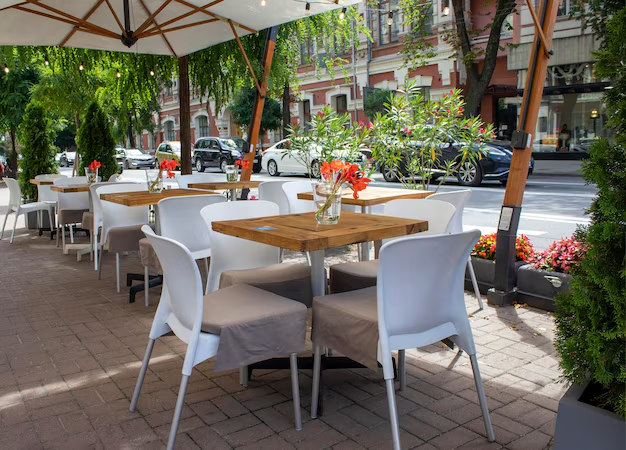
Outdoor and Patio Furniture
Given Atlanta’s generally warm climate, outdoor seating is often a major draw:
Materials suited to weather
- Many operators favor metal, treated wood, or all-weather resin.
- Cushions and fabrics are often selected for resistance to moisture and fading.
Stackable or foldable pieces
- Helpful in managing seasonal changes and daily storage needs.
Umbrellas and shade structures
- Often combined with tables to improve comfort during hot or sunny days.
Materials and Durability: What Holds Up in Atlanta
Climate, usage, and cleaning practices all influence which materials perform best over time.
Common Materials for Restaurant Furniture
Wood
- Warm, classic look that suits many Atlanta concepts, from rustic to refined.
- Often requires regular care and is sensitive to moisture and harsh cleaners.
Metal
- Frequently used for frames, bases, and outdoor pieces.
- Powder-coated finishes can improve resistance to wear and corrosion.
Laminate and veneer
- Provide a wide range of looks at generally lower cost than solid wood or stone.
- Often valued for consistent appearance and ease of cleaning.
Plastic and composite materials
- Can be lightweight, stackable, and weather-resistant.
- Often chosen for patios, casual concepts, or areas needing frequent rearrangement.
Upholstery and fabrics
- Vinyl and certain performance fabrics are commonly used for restaurant seating.
- Stain resistance, cleanability, and colorfastness tend to be major priorities.
Cleaning and Maintenance Considerations
With high guest turnover, spills, and frequent cleaning, furniture in Atlanta restaurants encounters a lot of daily wear:
- Surfaces that tolerate routine disinfection can help maintain both appearance and hygiene.
- Darker finishes may hide stains but can show scratches more clearly.
- Smooth, non-porous materials are often easier to wipe down quickly between seatings.
Thinking through your cleaning practices at the same time you select materials can prevent frustration later.
Balancing Style, Comfort, and Function
Every piece of furniture carries three overlapping demands: it needs to look right, feel comfortable, and work practically.
Visual Cohesion With Your Brand
Furniture often expresses your concept at a glance:
- A southern-inspired restaurant may gravitate toward warm woods, soft tones, and traditional lines.
- A modern urban eatery might emphasize metal, clean shapes, and bolder contrasts.
- A family-focused venue may favor durable surfaces, rounded edges, and bright, inviting colors.
Color, finish, and shape can all align with your menu, logo, and interior finishes to create a consistent experience.
Comfort and Ergonomics
Comfort influences how guests perceive value:
- Chair seat depth and back angle affect how relaxed guests feel.
- Table height in relation to chairs or booths matters for ease of eating and conversation.
- In bar areas, footrests and back support often make a noticeable difference.
Many operators in Atlanta’s competitive market recognize that return visits are often supported by small details like how comfortable it feels to linger over dessert or a second drink.
Operational Practicality
Operational needs are just as important as aesthetics:
- Reconfigurability – Can you easily shift tables for larger parties?
- Weight – Heavier pieces stay put but are hard to move for cleaning or events.
- Floor protection – Glides and pads reduce noise and protect flooring.
When evaluating options, it can help to imagine a typical busy evening: servers moving quickly, tables turning, guests arriving in varied group sizes. Furniture that supports that flow can reduce stress on staff and improve the overall experience.
Atlanta-Specific Considerations
Atlanta’s restaurant scene and environment introduce a few unique dynamics that often influence furniture choices.
Urban vs. Suburban Locations
Intown neighborhoods (Midtown, Old Fourth Ward, Westside, etc.)
- Spaces may be smaller or uniquely shaped.
- Flexible, space-saving furniture often becomes a priority.
- Outdoor seating can be a key differentiator where sidewalk or patio space is limited.
Suburban areas and mixed-use developments
- Often have larger footprints and more defined patio or courtyard spots.
- Concepts may lean toward family dining, spacious booths, and larger tables.
Climate and Seasonality
Atlanta’s climate supports outdoor dining much of the year, but:
- Summer heat and humidity can be intense.
- Occasional heavy rains and storms put stress on outdoor materials.
- Pollen season can influence how often outdoor furniture needs cleaning.
Pieces that can handle frequent wiping, occasional covering, or quick repositioning are often seen as especially practical for patios and sidewalk setups.
Budgeting and Planning for Restaurant Furniture
Furniture is a significant part of a restaurant’s initial investment, but also an element visible to every guest. Many operators aim for balanced spending: durable, functional pieces that look good, without overspending on items that don’t add value.
Common Budget Factors
- Quantity – Number of chairs, tables, bar stools, patio sets, and waiting area seats.
- Customization – Custom upholstery, finishes, or built-ins typically carry higher costs.
- Lead times – Specialty orders or custom pieces may take longer to arrive.
Planning well in advance can help avoid delays around opening or renovation dates, especially during busy seasons when many Atlanta establishments are updating their spaces at once.
Lifecycle Perspective
Some restaurant owners look beyond immediate cost and consider:
- Expected lifespan of materials in a high-traffic environment.
- Repairability – Whether fabrics can be reupholstered or parts replaced.
- Timeless vs. trend-driven designs – Neutral basics can often adapt to future decor updates.
This approach can support a more stable, long-term design that evolves with menu changes or brand refreshes.
Layout and Flow: Turning Furniture Into a Functional Space
Arranging furniture is as important as choosing it. A thoughtful layout can affect everything from guest satisfaction to staff efficiency.
Key Layout Principles
- Clear paths – Guests should be able to find their table, restrooms, and exits without confusion.
- Server efficiency – Straightforward routes from kitchen and bar reduce steps and bottlenecks.
- Noise levels – Soft materials, booth backs, and strategic spacing can help manage sound.
- Sightlines – Hosts benefit from seeing open tables; guests often appreciate partial privacy without feeling isolated.
Adapting to Different Times of Day
Some Atlanta restaurants and cafés operate from morning through late evening, using furniture to subtly shift the mood:
- Morning – Brighter lighting and smaller tables suit breakfast and solo guests.
- Midday – More emphasis on turnover and quick service, with clear traffic flow.
- Evening – Dimmer lighting, reconfigured tables, or candles can introduce a more intimate feel.
Furniture that can be rearranged or combined easily helps support these transitions.
Quick Reference: Key Considerations for Restaurant Furniture in Atlanta
Below is a concise overview of major decisions to keep in mind.
🧾 Restaurant Furniture Checklist
- ✅ Clarify your concept: casual, upscale, family, bar-forward, café, or hybrid.
- ✅ Assess your space: capacity needs, layout, and accessibility routes.
- ✅ Plan for Atlanta’s climate: especially if using patios, rooftop decks, or sidewalk seating.
- ✅ Choose suitable materials: balance durability, maintenance, and appearance.
- ✅ Prioritize comfort: test seating height, support, and spacing around tables.
- ✅ Support operations: consider reconfigurability, cleaning routines, and staff movement.
- ✅ Think long-term: how well the style and quality will hold up over years of use.
🔍 At-a-Glance Comparison Table
| Area of Use | Typical Furniture Choices | Helpful Priorities |
|---|---|---|
| Main Dining Room | Chairs, tables, booths/banquettes | Comfort, capacity, ease of cleaning |
| Bar Area | Bar stools, high-top tables | Durability, stability, guest support |
| Outdoor Patio | Weather-resistant tables, chairs, umbrellas | Climate resistance, stackability, cleaning |
| Waiting Area | Benches, lounge chairs, small side tables | Space efficiency, guest comfort |
| Private/Group Area | Flexible tables, stackable or movable chairs | Reconfigurability, noise management |
Bringing It All Together
Selecting restaurant furniture in Atlanta is ultimately about alignment: matching your concept, space, and operations with pieces that support the experience you want guests to have. When style, comfort, and function work together, furniture becomes an integral part of your restaurant’s story rather than just what people sit on.
By taking time to understand your layout, your climate, and your day-to-day needs, you can create a dining environment that feels welcoming, functions smoothly, and stands out in a city known for its vibrant, evolving food scene.
Related Topics
- 356 Restaurant Atlanta
- 57th Fighter Group Restaurant Atlanta
- 57th Restaurant Atlanta Georgia
- 57th Squadron Restaurant Atlanta
- 5 Church Atlanta Restaurant
- 5 Seasons Restaurant And Brewery Atlanta
- 7 Lamps Restaurant Atlanta
- A2b Restaurant Atlanta
- African Restaurant Atlanta
- Alma Cocina Restaurant Atlanta
- Amalfi Restaurant Atlanta
- a Mano Atlanta Restaurant
- American Cut Restaurant Atlanta
- Anis Restaurant Atlanta Ga
- Antico Restaurant Atlanta
- Apres Diem Restaurant Atlanta
- Argosy Restaurant Atlanta
- Aria Atlanta Restaurant
- Asante Restaurant Atlanta
- Astor Court Restaurant Atlanta
- Atkins Park Restaurant Atlanta
- Atlanta Airport Restaurant
- Atlanta Bangladeshi Restaurant
- Atlanta Best Thai Restaurant
- Atlanta Biscuit Restaurant