Staplehouse in Atlanta: From Acclaimed Restaurant to Lasting Legacy
If you search for “Staplehouse Atlanta restaurant” today, you will see a lot of praise, curiosity, and a fair amount of confusion. Was it a restaurant? Is it still open? Why do people still talk about it?
Staplehouse has become one of Atlanta’s most talked‑about dining stories—not just because of its food, but because of the people, the mission, and the community impact behind it. This guide walks through what Staplehouse was, how it evolved, what made it special, and how its legacy continues to shape conversations around food, hospitality, and purpose‑driven dining in Atlanta.
What Was Staplehouse in Atlanta?
Staplehouse was a neighborhood restaurant in Atlanta’s Old Fourth Ward that drew widespread attention for its inventive food and unusually community‑focused model.
A Brief Background
- Location: Old Fourth Ward, Atlanta, Georgia
- Concept: Thoughtful, seasonal, chef‑driven cuisine
- Ownership and team: A close‑knit group of family and friends, including chef‑driven leadership and a strong front‑of‑house presence
- Unique angle: A significant portion of profits supported a nonprofit created to assist restaurant workers in need
Staplehouse was often described as a fine‑dining experience wrapped in a casual, intimate setting. Guests commonly noted the balance between polished technique and an approachable, almost home‑style sense of welcome.
The Story Behind Staplehouse
Understanding Staplehouse means understanding its origin story, which is deeply tied to both personal loss and community support.
The Human Story
The restaurant grew out of a combination of:
- A passion for creative, ingredient‑driven cooking
- A strong family connection
- A desire to turn a deeply personal challenge into something that could support others in the hospitality industry
Over time, this vision led to the creation of a nonprofit arm that helped restaurant workers facing unexpected hardship. Many diners learned about Staplehouse through this story, and the restaurant became a symbol of how food, community, and mutual support could intertwine.
Mission and Model
Staplehouse’s operation was often described in terms of:
- Thoughtful sourcing of ingredients
- Rotating, seasonal dishes based on availability and inspiration
- Hospitality that felt personal, not formulaic
- Profits contributing to a nonprofit focused on industry workers
This blend of restaurant and charitable mission set Staplehouse apart in the crowded Atlanta food scene.
What Made Staplehouse’s Food Stand Out?
Many guests and food observers considered Staplehouse one of Atlanta’s most distinctive restaurants during its tenure.
Culinary Approach
Staplehouse’s menu was known for:
- Seasonal focus: Dishes changed regularly to highlight what was fresh and in season.
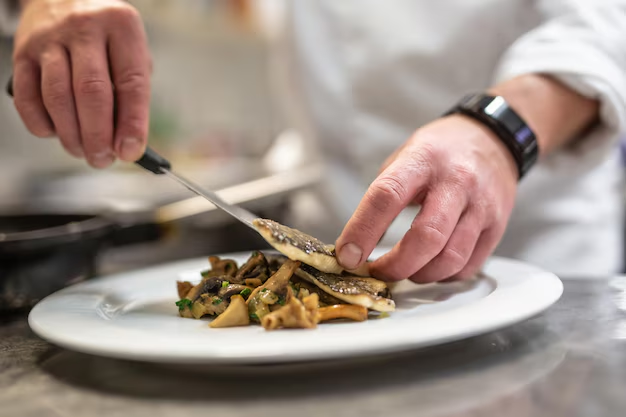
- Modern technique: Plates often showed careful attention to texture, balance, and plating.
- Comfort plus creativity: Familiar elements—like vegetables, grains, and meats—were reimagined in new ways rather than replaced with novelty for its own sake.
Instead of relying on heavy sauces or showy presentations, the cooking often emphasized:
- Clean flavors
- Thoughtful combinations
- Careful execution
The Dining Experience
Guests frequently described the experience in terms such as:
- Intimate and relaxed, rather than stiff or overly formal
- Course‑based structure, guiding diners through multiple small plates or tasting‑style progressions
- Story‑driven hospitality, where staff explained the inspiration behind dishes or ingredients
The result felt both special‑occasion worthy and human in scale, which helped Staplehouse stand out among restaurants that leaned heavily in one direction or the other.
Is Staplehouse Still Open as a Restaurant?
Staplehouse no longer operates in the same sit‑down restaurant format that originally made it well known. Over time, it transitioned away from the tasting‑menu, reservation‑based experience that many people still associate with the name.
Restaurant concepts commonly evolve due to:
- Changing economic conditions
- Shifts in consumer behavior
- Personal and professional decisions by owners and operators
- Larger events that affect the restaurant industry in general
Staplehouse followed this broader pattern of reinvention and adaptation, responding to circumstances while still trying to uphold its core values of hospitality and community care.
If someone wants the most current status of the physical space or concept, they would typically:
- Check recent local Atlanta food coverage
- Look for the latest information via search engines
- Review up‑to‑date business listings
Because restaurants frequently adjust hours, concepts, or operations, any specific operational detail is best verified close to the time of a planned visit.
Staplehouse’s Community and Nonprofit Connection
One of the most widely discussed aspects of Staplehouse was its connection to a nonprofit supporting hospitality workers.
How the Nonprofit Element Worked
While the exact structure evolved over time, the general idea was:
- The restaurant generated revenue through its food and beverage service.
- A portion of proceeds helped fund a nonprofit organization aimed at assisting restaurant workers experiencing crises such as illness, financial shocks, or unexpected life events.
- Diners often learned that their meal contributed to broader community support, not only to the restaurant itself.
This model positioned Staplehouse at the intersection of:
- Social enterprise
- Hospitality
- Mutual aid within the restaurant community
Why This Mattered
The restaurant industry can be physically and emotionally demanding, with many workers navigating:
- Irregular schedules
- Limited safety nets
- High stress during peak service hours
By connecting its operations to a nonprofit, Staplehouse became part of a wider conversation about care within the industry, inspiring interest in how restaurants might better support the people who make them possible.
Why People Still Search for “Staplehouse Atlanta Restaurant”
Even after changes to its original format, Staplehouse remains a frequent search term for several reasons.
1. Lasting Critical Recognition
Staplehouse received significant acclaim during its run, including national recognition in food media. This attention placed it firmly on the map for:
- Food tourists planning trips to Atlanta
- Locals seeking special‑occasion dining
- Industry professionals curious about its business model and menu
Because online articles and roundups live on, many readers still encounter Staplehouse in lists of memorable or influential restaurants.
2. Interest in Purpose‑Driven Dining
Many people are increasingly interested in restaurants with a mission, such as:
- Supporting local farms
- Reducing food waste
- Donating to or operating alongside nonprofit efforts
Staplehouse frequently enters these conversations as an example of a restaurant with a philanthropic angle, especially in the context of supporting hospitality workers.
3. Curiosity About Restaurant Evolution
Food‑interested readers often track how notable restaurants:
- Adapt
- Rebrand
- Pivot concepts
Staplehouse’s evolution is an example of how even highly regarded restaurants may shift formats or close while leaving a strong legacy.
How Staplehouse Fits into the Atlanta Dining Scene
Atlanta’s restaurant landscape is known for its variety, blending:
- Long‑standing local institutions
- New chef‑driven concepts
- Culturally diverse neighborhoods
- A growing interest in seasonal and regional ingredients
Within this ecosystem, Staplehouse is often remembered for:
- Pushing boundaries of what a neighborhood restaurant could be
- Bringing national attention to Atlanta’s culinary creativity
- Demonstrating that a restaurant could prioritize community impact alongside culinary ambition
For many observers, Staplehouse helped reinforce Atlanta’s reputation as a serious food city with its own style and story, rather than just following trends from larger markets.
Lessons from Staplehouse for Diners and Restaurant Observers
Staplehouse’s story offers several broader takeaways about dining, community, and how restaurants shape local culture.
1. Restaurants Can Be More Than Businesses
Staplehouse illustrated how a restaurant can also function as:
- A community gathering point
- A platform for storytelling
- A vehicle for charitable impact
This approach resonates with diners who view spending money on food as a way to support values they care about, not just to enjoy a meal.
2. Hospitality Work Deserves Visibility and Support
By tying its operations to a nonprofit for industry workers, Staplehouse highlighted:
- The often unseen challenges hospitality workers face
- The importance of financial and emotional support systems
- The idea that caring for staff and community can be part of a restaurant’s identity, not just a behind‑the‑scenes detail
This perspective continues to influence conversations about worker well‑being in hospitality.
3. Creativity and Care Can Coexist
Staplehouse demonstrated that:
- Technical culinary skill and deep hospitality are not mutually exclusive
- A restaurant can deliver ambitious cuisine while still feeling human, warm, and grounded
- The experience of being cared for at the table can be as memorable as any single dish
Many diners and food observers look back on Staplehouse as an example of how far a restaurant can go when it treats food, people, and purpose with equal seriousness.
Quick Reference: Key Facts About Staplehouse 🍽️
Below is a simple overview that summarizes the most frequently searched points about Staplehouse Atlanta restaurant:
| Topic | Key Points |
|---|---|
| What it was | A chef‑driven neighborhood restaurant in Atlanta’s Old Fourth Ward |
| Style of food | Seasonal, modern, creative dishes with a focus on thoughtful technique |
| Atmosphere | Intimate, relaxed, and personal, with tasting‑style experiences |
| Notable feature | Profits connected to a nonprofit supporting hospitality workers |
| Current status | No longer operating in the original fine‑dining restaurant format |
| Ongoing relevance | Frequently cited as a model of purpose‑driven, community‑focused dining |
Practical Tips for People Searching “Staplehouse Atlanta Restaurant” 🔍
If you are researching Staplehouse today, these pointers can help you navigate what you find:
- ✅ Check dates on articles: Many glowing features were written during its peak as a full restaurant. Be sure to note when each piece was published.
- ✅ Look up current business details: Restaurant operations, menus, and concepts can shift; always rely on the most recent information before planning a visit.
- ✅ Explore related Atlanta restaurants: Food lovers inspired by Staplehouse’s story may also be interested in other Atlanta spots that focus on seasonal cooking, local sourcing, or community‑oriented missions.
- ✅ Learn about support for hospitality workers: If the nonprofit side of Staplehouse interests you, local and national organizations often share ways that diners and community members can support industry workers.
These steps help ensure that expectations line up with what Staplehouse is now, not just what it used to be.
Why Staplehouse’s Legacy Still Matters
Even though the original Staplehouse restaurant is no longer serving in its earliest form, its influence continues in several ways:
- It remains a reference point in discussions about Atlanta’s rise as a notable food city.
- It offers a real‑world example of blending hospitality, storytelling, and philanthropy.
- It shows how a restaurant can have an impact that outlives its original format, especially when it prioritizes people and community.
For anyone exploring “Staplehouse Atlanta restaurant” today, the story that emerges is less about making a reservation and more about understanding how one small restaurant helped reshape ideas about what dining can mean—for guests, for staff, and for the city around it.
Related Topics
- 356 Restaurant Atlanta
- 5 Church Atlanta Restaurant
- 5 Seasons Restaurant And Brewery Atlanta
- 57th Fighter Group Restaurant Atlanta
- 57th Restaurant Atlanta Georgia
- 57th Squadron Restaurant Atlanta
- 7 Lamps Restaurant Atlanta
- a Mano Atlanta Restaurant
- A2b Restaurant Atlanta
- African Restaurant Atlanta
- Alma Cocina Restaurant Atlanta
- Amalfi Restaurant Atlanta
- American Cut Restaurant Atlanta
- Anis Restaurant Atlanta Ga
- Antico Restaurant Atlanta
- Apres Diem Restaurant Atlanta
- Argosy Restaurant Atlanta
- Aria Atlanta Restaurant
- Asante Restaurant Atlanta
- Astor Court Restaurant Atlanta
- Atkins Park Restaurant Atlanta
- Atlanta Airport Restaurant
- Atlanta Bangladeshi Restaurant
- Atlanta Best Thai Restaurant
- Atlanta Biscuit Restaurant